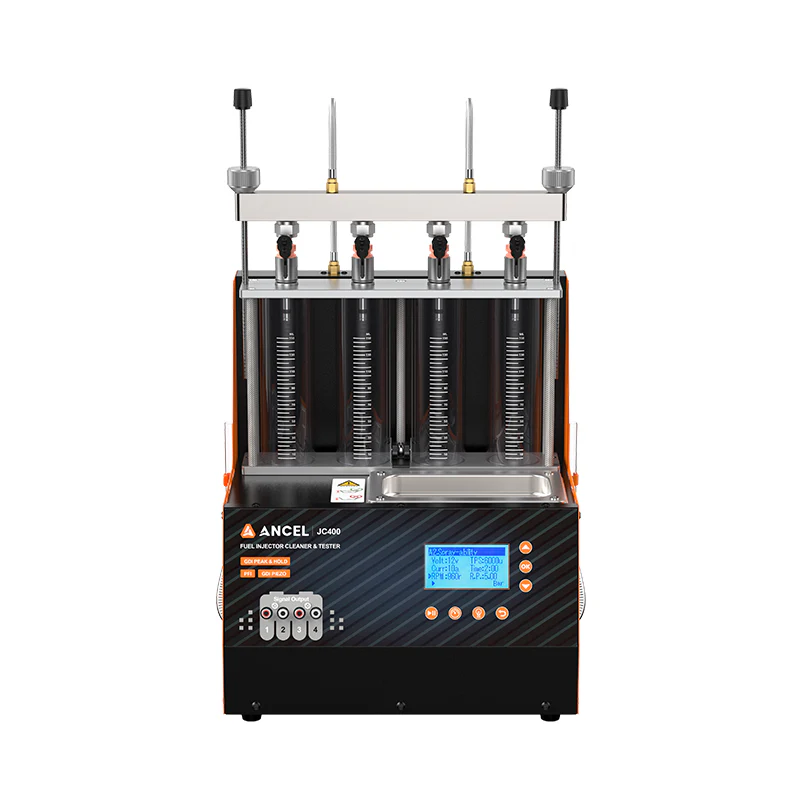
ANCEL JC400 Fuel Injector Tester & Ultrasonic Cleaner for PFI GDI & Piezo
JC400-Fuel Injector Cleaner and Tester for PFI, GDI, and Piezo Injectors
Why Do You Need a Fuel Injector Cleaner?
As your engine burns fuel at high temperatures, carbon deposits gradually form on the injector tips and inside the tiny nozzle holes. Over time, gum and varnish residues also build up on the injector’s inner walls and valve surfaces. These contaminants cause poor atomization, clogging, or even fuel leakage, leading to:
Increased fuel consumption
Loss of engine power
Rough idle or unstable RPM
Poor acceleration performance
A professional injector cleaner and tester like JC400 helps remove stubborn carbon and restore precise fuel delivery — making your engine run smoother and more efficiently.
Wide Injector Compatibility – JC400
JC400 supports multiple injector types including Low-Resistance PFI (6V), Standard PFI (12V), GDI Peak & Hold (60–100V), and GDI Piezo (100–170V), ensuring full coverage for both traditional and modern engines.
Ultrasonic Cleaning
Powered by a 60W ultrasonic system operating at 28–46kHz, the JC400 generates penetrating ultrasonic shock waves and high-frequency vibrations. These vibrations reach deep into the injector’s internal channels— even microscopic passages—effectively breaking down and removing stubborn carbon buildup, gum, and deposits.
Spray Test
When to Use:
Engine runs roughly or idles unevenly.
Poor acceleration or increased fuel consumption.
Visible smoke or poor combustion performance.
What It Solves:
Detects uneven atomization or partial injector blockage.
Improves fuel-air mixture for better combustion efficiency.
Confirms injector performance after cleaning.
The spray test simulates the actual fuel injection process to check the injector's atomization quality and spray pattern. It is mainly used when the engine runs unevenly, shows poor acceleration, or emits excessive smoke. By observing the spray shape and uniformity, users can determine whether the injector nozzle is partially blocked or delivering insufficient fuel.This test helps identify fuel distribution issues that affect combustion efficiency and power output. It is recommended to use the spray test after cleaning to verify injector recovery.
Leak Test
When to Use:
Smell of fuel around the vehicle.
Unstable idling or hard engine start.
Abnormal fuel consumption.
What It Solves:
Detects injector seal failure and fuel drips.
Prevents fuel waste and fire hazards.
Ensures stable fuel pressure after shutdown.
The leak test checks the injector's sealing performance by maintaining system pressure and observing any signs of fuel leakage. This test is essential when the engine experiences unstable idling, fuel odor, or excessive fuel consumption.
It ensures that injectors can maintain pressure without dripping after shutdown, preventing potential fuel waste, fire risks, and starting difficulties caused by pressure loss.
During the test, always ensure all injectors are securely fixed to prevent fluid spraying under pressure.
Acceleration Test
When to Use:
Acceleration lag or throttle delay.
Poor performance at high RPM.
Irregular fuel delivery under load.
What It Solves:
Tests injector response under variable pulse width and frequency.
Ensures accurate fuel delivery at all speed ranges.
Improves throttle response and overall engine performance.
The acceleration test evaluates the injector’s response under variable pulse width and frequency, simulating different engine speeds and load conditions. It is particularly useful for diagnosing acceleration lag, poor throttle response, or uneven fuel delivery at high RPM.
By varying the injection frequency, users can check how quickly and accurately the injector reacts to changing signals.
This test ensures that injectors deliver the right amount of fuel across all speed ranges, improving responsiveness and overall engine performance.
JC400-Fuel Injector Cleaner and Tester for PFI, GDI, and Piezo Injectors
Why Do You Need a Fuel Injector Cleaner?
As your engine burns fuel at high temperatures, carbon deposits gradually form on the injector tips and inside the tiny nozzle holes. Over time, gum and varnish residues also build up on the injector’s inner walls and valve surfaces. These contaminants cause poor atomization, clogging, or even fuel leakage, leading to:
Increased fuel consumption
Loss of engine power
Rough idle or unstable RPM
Poor acceleration performance
A professional injector cleaner and tester like JC400 helps remove stubborn carbon and restore precise fuel delivery — making your engine run smoother and more efficiently.
Wide Injector Compatibility – JC400
JC400 supports multiple injector types including Low-Resistance PFI (6V), Standard PFI (12V), GDI Peak & Hold (60–100V), and GDI Piezo (100–170V), ensuring full coverage for both traditional and modern engines.
Ultrasonic Cleaning
Powered by a 60W ultrasonic system operating at 28–46kHz, the JC400 generates penetrating ultrasonic shock waves and high-frequency vibrations. These vibrations reach deep into the injector’s internal channels— even microscopic passages—effectively breaking down and removing stubborn carbon buildup, gum, and deposits.
Spray Test
When to Use:
Engine runs roughly or idles unevenly.
Poor acceleration or increased fuel consumption.
Visible smoke or poor combustion performance.
What It Solves:
Detects uneven atomization or partial injector blockage.
Improves fuel-air mixture for better combustion efficiency.
Confirms injector performance after cleaning.
The spray test simulates the actual fuel injection process to check the injector's atomization quality and spray pattern. It is mainly used when the engine runs unevenly, shows poor acceleration, or emits excessive smoke. By observing the spray shape and uniformity, users can determine whether the injector nozzle is partially blocked or delivering insufficient fuel.This test helps identify fuel distribution issues that affect combustion efficiency and power output. It is recommended to use the spray test after cleaning to verify injector recovery.
Leak Test
When to Use:
Smell of fuel around the vehicle.
Unstable idling or hard engine start.
Abnormal fuel consumption.
What It Solves:
Detects injector seal failure and fuel drips.
Prevents fuel waste and fire hazards.
Ensures stable fuel pressure after shutdown.
The leak test checks the injector's sealing performance by maintaining system pressure and observing any signs of fuel leakage. This test is essential when the engine experiences unstable idling, fuel odor, or excessive fuel consumption.
It ensures that injectors can maintain pressure without dripping after shutdown, preventing potential fuel waste, fire risks, and starting difficulties caused by pressure loss.
During the test, always ensure all injectors are securely fixed to prevent fluid spraying under pressure.
Acceleration Test
When to Use:
Acceleration lag or throttle delay.
Poor performance at high RPM.
Irregular fuel delivery under load.
What It Solves:
Tests injector response under variable pulse width and frequency.
Ensures accurate fuel delivery at all speed ranges.
Improves throttle response and overall engine performance.
The acceleration test evaluates the injector’s response under variable pulse width and frequency, simulating different engine speeds and load conditions. It is particularly useful for diagnosing acceleration lag, poor throttle response, or uneven fuel delivery at high RPM.
By varying the injection frequency, users can check how quickly and accurately the injector reacts to changing signals.
This test ensures that injectors deliver the right amount of fuel across all speed ranges, improving responsiveness and overall engine performance.
Original: $419.99
-65%$419.99
$147.00Description
JC400-Fuel Injector Cleaner and Tester for PFI, GDI, and Piezo Injectors
Why Do You Need a Fuel Injector Cleaner?
As your engine burns fuel at high temperatures, carbon deposits gradually form on the injector tips and inside the tiny nozzle holes. Over time, gum and varnish residues also build up on the injector’s inner walls and valve surfaces. These contaminants cause poor atomization, clogging, or even fuel leakage, leading to:
Increased fuel consumption
Loss of engine power
Rough idle or unstable RPM
Poor acceleration performance
A professional injector cleaner and tester like JC400 helps remove stubborn carbon and restore precise fuel delivery — making your engine run smoother and more efficiently.
Wide Injector Compatibility – JC400
JC400 supports multiple injector types including Low-Resistance PFI (6V), Standard PFI (12V), GDI Peak & Hold (60–100V), and GDI Piezo (100–170V), ensuring full coverage for both traditional and modern engines.
Ultrasonic Cleaning
Powered by a 60W ultrasonic system operating at 28–46kHz, the JC400 generates penetrating ultrasonic shock waves and high-frequency vibrations. These vibrations reach deep into the injector’s internal channels— even microscopic passages—effectively breaking down and removing stubborn carbon buildup, gum, and deposits.
Spray Test
When to Use:
Engine runs roughly or idles unevenly.
Poor acceleration or increased fuel consumption.
Visible smoke or poor combustion performance.
What It Solves:
Detects uneven atomization or partial injector blockage.
Improves fuel-air mixture for better combustion efficiency.
Confirms injector performance after cleaning.
The spray test simulates the actual fuel injection process to check the injector's atomization quality and spray pattern. It is mainly used when the engine runs unevenly, shows poor acceleration, or emits excessive smoke. By observing the spray shape and uniformity, users can determine whether the injector nozzle is partially blocked or delivering insufficient fuel.This test helps identify fuel distribution issues that affect combustion efficiency and power output. It is recommended to use the spray test after cleaning to verify injector recovery.
Leak Test
When to Use:
Smell of fuel around the vehicle.
Unstable idling or hard engine start.
Abnormal fuel consumption.
What It Solves:
Detects injector seal failure and fuel drips.
Prevents fuel waste and fire hazards.
Ensures stable fuel pressure after shutdown.
The leak test checks the injector's sealing performance by maintaining system pressure and observing any signs of fuel leakage. This test is essential when the engine experiences unstable idling, fuel odor, or excessive fuel consumption.
It ensures that injectors can maintain pressure without dripping after shutdown, preventing potential fuel waste, fire risks, and starting difficulties caused by pressure loss.
During the test, always ensure all injectors are securely fixed to prevent fluid spraying under pressure.
Acceleration Test
When to Use:
Acceleration lag or throttle delay.
Poor performance at high RPM.
Irregular fuel delivery under load.
What It Solves:
Tests injector response under variable pulse width and frequency.
Ensures accurate fuel delivery at all speed ranges.
Improves throttle response and overall engine performance.
The acceleration test evaluates the injector’s response under variable pulse width and frequency, simulating different engine speeds and load conditions. It is particularly useful for diagnosing acceleration lag, poor throttle response, or uneven fuel delivery at high RPM.
By varying the injection frequency, users can check how quickly and accurately the injector reacts to changing signals.
This test ensures that injectors deliver the right amount of fuel across all speed ranges, improving responsiveness and overall engine performance.